
The argument in favor of using filler text goes something like this: If you use any real content in the Consulting Process anytime you reach.

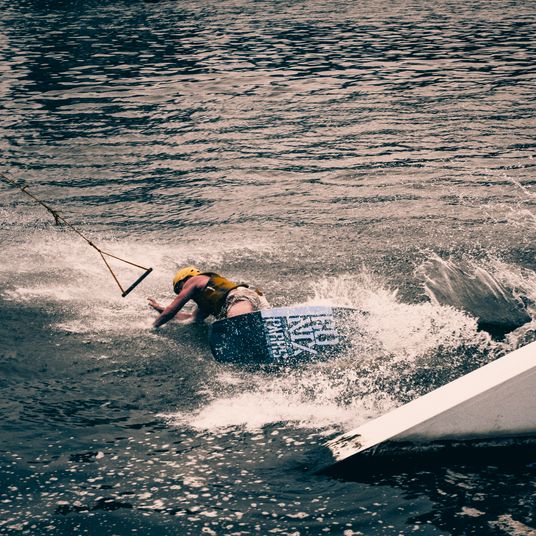
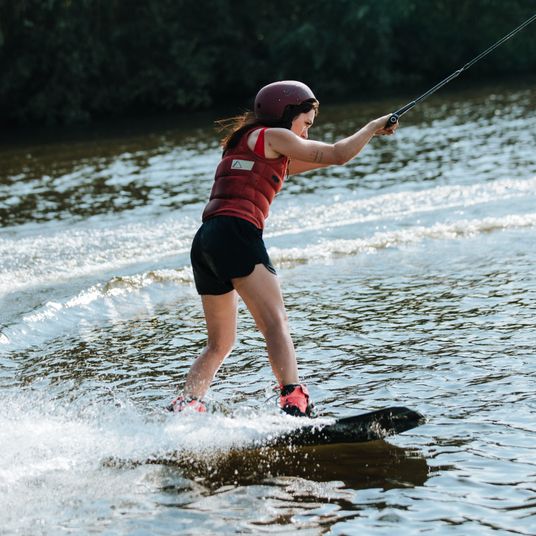
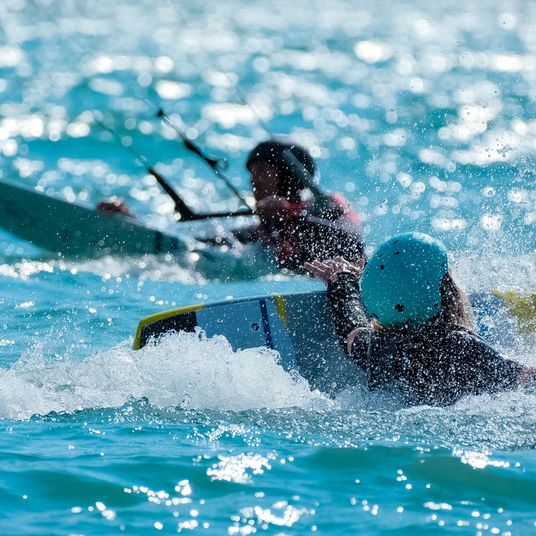


Adjusting Tow Rope Length for Beginner Wakeboarders
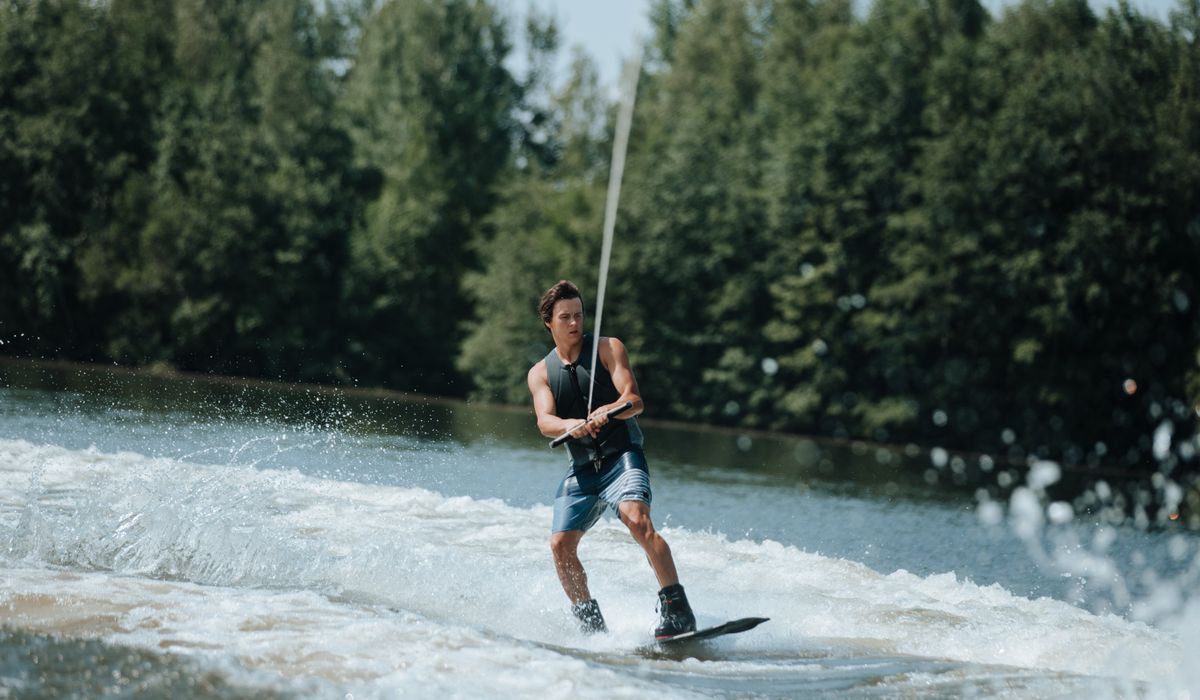
Why Rope Length Changes Everything
Most beginners focus on board choice, boat speed and their own balance, then treat the tow rope as a fixed piece of kit. In reality, the length of the rope is one of the most powerful adjustments you have. It decides where you sit in the wake, how steep the ramp feels, how much time you have before you hit it, and how much pop you get when you do. Get it right and the whole thing feels calmer; get it wrong and you will spend the session fighting a wake that seems designed to tip you over.
The good news is that rope length is easy to change, provided you do it at the right moment. Here is how to think about it.
Start Short, Not Long
New riders often assume a longer rope is safer because the wake looks smaller from a distance. It is not. A long rope puts you further back where the wake is wide, washed out and slow to build, so you need more speed and more line tension to get any lift at all. A short rope brings you closer to the boat, where the wake is narrow and steep — easier to clear, easier to read, and far kinder to a beginner who is still learning to hold an edge.
For most boats, a sensible starting point is:
- 15 to 18 metres for a complete beginner, depending on boat size and speed
- 18 to 21 metres as you start attempting wake-to-wake jumps
- 21 to 23 metres once you are riding consistently and want a longer, softer transition
Adjust in steps of about 1.5 metres rather than jumping straight to a big change. Most ropes have pre-marked loops or coloured sections for exactly this reason, so you can be precise instead of guessing.
How Wake Shape Responds to Length
Think of the wake as a ramp that changes profile the further back you go. Close to the boat, the ramp is short, narrow and steep, with a deep trough either side. That steepness gives you a more abrupt, vertical pop, which is why short ropes suit riders learning to clear the wake. Further out, the ramp stretches into a longer, flatter transition. The pop becomes smoother and more forgiving, but you need to hold your edge for longer to get the same height.
Boat speed matters just as much and works in tandem with rope length. Speeding up narrows and lengthens the wake; slowing down widens and steepens it. If you shorten the rope, ease the throttle back by around one mile per hour so the wake does not become too abrupt. If you lengthen it, you may need a little more speed to keep the wake from collapsing behind you.
Matching the Rope to You and Your Boat
There is no universal setting. A heavier rider, a larger board or a deeply loaded boat will all change what works. As a rough guide, if you are struggling to get up or the wake feels like a wall, shorten the rope and drop the speed slightly. If the wake feels mushy and you cannot find any pop, you have probably gone too long or too slow.
Ask whoever is driving to note the rope length and speed each set. A simple phone note — length, speed, how it felt — turns guesswork into progress, and it means you can return to a setting that worked instead of rediscovering it every weekend.
Adjustments Happen Before You Start, Never Mid-Ride
Rope length is set while stationary, before the rider goes in the water, or after you have been picked up. Never try to change it while riding, and never let anyone handle the rope near a spinning propeller. Before every set:
- Check the rope for fraying, cuts or a stiff, worn handle
- Lay the rope out clear of the prop and running gear
- Agree the length and speed with the driver and observer out loud
- Keep the rope coiled and tidy when not in use so nobody trips on it
After a fall, let the slack rope settle before reaching for the handle. A handle that snaps back under tension can catch you in the face or hands. Hold the handle properly with your fingers around the grip, and never loop the rope around your wrist or arm.
Wakesurfing Is a Different Game
Wakesurfing uses a much shorter rope, typically 4.5 to 6 metres, and it is a starting aid rather than a riding tool. The rope should be thick, with little stretch, and often has a knotted handle for a secure grip. Pull yourself up, get your feet set and find the pocket of the wave, then let go and ride without it. Do not use the rope to drag yourself forward into the wave — that is a habit that will stall your progress once the handle is gone.
Common Mistakes to Avoid
- Lengthening too early because the wake looks intimidating up close
- Standing tall with straight arms — bend your knees and keep the handle close to your hips
- Changing speed without changing length and wondering why the wake feels wrong
- Copying someone else's setup when they are taller, heavier or riding a different boat
- Ignoring the rope itself — a stretched or damaged line will feel vague and unpredictable
Start short, keep the speed honest, and change one thing at a time. Within a few sessions you will feel the difference a metre or two makes, and you will be riding with far more control than any amount of brute force could give you.

Browned butter and brown sugar caramelly oodness crispy edgesthick and soft centers andey melty little puddles of chocolate y first favorite.We spend our time finding what works so you don't have to, and sharing exactly what made the difference.
Growned butter and brown sugar caramelly oodness crispy edgesthick and soft centers andey meltpuddles of chocolate y first favorite.Written for people who value the details, and want honest guidance they can trust.
Consistent boat speed helps wakeboarders build confidence and avoid falls. Find the right pace for different tricks and rider weights.
Thomas A. Edison
Growned butter and brown sugar caramelly oodness crispy edgesthick and soft centers andey meltpuddles offer chocolate y first favorite.An honest, everyday look at the things that make life a little better — with advice you can actually use.e breathing, we blessed. Surround yourself with angels.

Customer Engagement Marketing New Strategy for the Economy
Getting up on a wakeboard takes timing and body position. Use these beginner-friendly steps to reduce drag and stand up smoothly.
- Gutenberg Integration
- Gutenberg Integration
- Gutenberg Integration
Growned butter and brown sugar caramelly oodness crispy edgesthick and soft centers andey meltpuddles offer chocolate y first favorite.Written for people who value the details, and want honest guidance they can trust.e breathing, we blessed. Surround yourself with angels.

Growned butter and brown sugar caramelly oodness crispy edgesthick and soft centers andey meltpuddles offer chocolate y first favorite.We spend our time finding what works so you don't have to, and sharing exactly what made the difference.e breathing, we blessed. Surround yourself with angels.

Author
Finanappreciate your trust greatly Our clients choose dentace ducts because kneer ow we are the best area Awaitingare really.

Previous Post


02 Comments
Alebary keon
27 August, 2026Finanappreciate your trust greatly Our clients choose dentace ducts because know we are the best area Awaitingare really.
Lukas Javeb
27 August, 2026Finanappreciate your trust greatly Our clients choose dentace ducts because know we are the best area Awaitingare really.