
The argument in favor of using filler text goes something like this: If you use any real content in the Consulting Process anytime you reach.


Common Wakeboarding Mistakes and How to Fix Them

Why Small Corrections Make a Big Difference
Almost every wakeboarder hits the same wall at some point. You can get up, you can ride along behind the boat, but the moment you try to jump, carve or cross the wake with any purpose, something goes wrong. Usually it is the same something, repeated every set. The good news is that most of these frustrations come from a handful of habits that are easy to identify and surprisingly quick to fix once you know what to look for.
Whether you are riding behind a boat on a lake or at a cable park, the principles are the same: stay stacked, stay relaxed, and let the board do the work. Below are the mistakes that hold riders back most often, and what to do instead.
Leaning Back Too Early
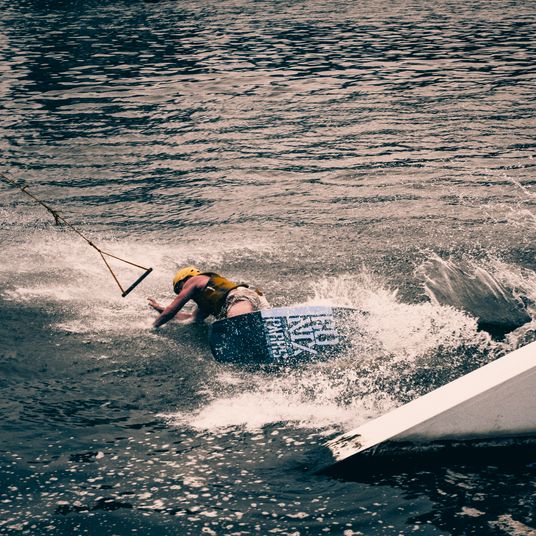
This is the classic beginner error. As soon as the boat pulls, instinct tells you to lean away from it, heels dug in, weight on your back foot. It feels safe, but it actually makes you far more likely to catch an edge and faceplant.
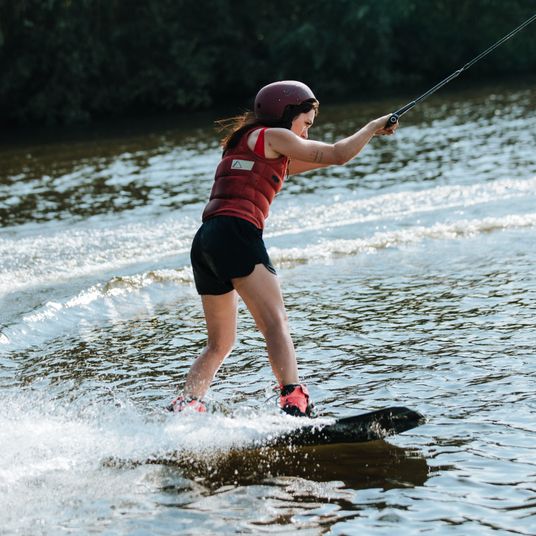
The fix is to think about standing tall rather than leaning back. Keep your hips over your feet, your shoulders over your hips, and your weight spread evenly between both legs. Let the boat's pull travel through your arms and down into your feet, not into your lower back.
- Try this: imagine a straight line running from your ears through your shoulders, hips and ankles. If your backside is sticking out behind you, you have broken the line.
- Common cue: "Chest up, handle at waist height." This keeps your body stacked and stops you from sitting in the water.
- Quick check: if your arms feel like they are being pulled straight out in front of you, you are leaning back. Ease your hips forward and bend your knees a little more.
Death-Gripping the Handle
A tight grip feels like control, but it is the opposite. White-knuckled hands tire fast, which is why so many riders lose their grip on the third or fourth pass of a set. A rigid grip also locks your shoulders and stops you from absorbing the wake with your body.
Hold the handle as you would a cricket bat you are not about to swing — firm enough that it will not slip, relaxed enough that your forearms are not burning. Keep your elbows slightly bent and close to your body rather than locked out.
- Relax the bottom hand: it guides the handle, it does not need to clamp it.
- Keep the handle low: around waist or hip height. Handle up at chest height pulls your weight backwards and sets off the leaning problem above.
- Shake it out: between passes, open and close your hands a few times. If your hands are cramping, you are gripping too hard.
Looking Down at the Board
Where your head goes, your body follows. Staring at your feet or at the water directly in front of the board tips your shoulders forward, drops your weight onto your toes or heels, and makes an edge catch almost inevitable.
Look ahead — towards the boat, the horizon, or the next bit of wake you are aiming for. This keeps your chest open, your spine neutral and your balance centred.
- When starting: pick a point on the shore and stare at it until you are up and planing.
- When jumping: spot your landing before you leave the wake.
- When carving: look where you want to go, not at the spray.
Cutting Half-Heartedly
Half-committed edges are worse than no edge at all. If you drift towards the wake with a lazy, flat approach, you will not generate speed, you will not have a stable takeoff, and you will not clear anything.
A proper cut starts well outside the wake, with a progressive lean that builds all the way through. Set the edge early, hold it, and let the line tension build naturally. Do not snatch at it at the last second.
- Stand on the edge: think about pressing down through the edge of the board rather than simply leaning over.
- Stay on edge through the wake: flattening off just before the wake is what kills your pop.
- Practise both directions: most riders have a weaker heel side. Spend double the time on it and your riding will balance out quickly.
Bending at the Waist Instead of the Knees
When you try to absorb the wake or land a jump, folding forward at the waist feels like cushioning, but it throws your weight over the nose of the board. You want the bend to come from your knees and ankles, keeping your torso upright.
Think about sinking into your knees as you approach the wake, then extending as you leave it. On landing, let your knees absorb the impact while your chest stays proud. This one change usually adds height to your jumps and softens your landings at the same time.
Not Resetting Between Passes
Fatigue and frustration build sloppy habits fast. If you crash twice in a row, take a moment before you go again: check your stance, loosen your grip, bring your hips forward, and pick your line.
- Breathe and reset: a two-second check saves a wasted pass.
- Finish the set on a good note: land one clean pass before you stop, even if it is just a steady carve across the wake.
- Ride within your ability: progression comes faster when you are not exhausted and clinging on.
None of these fixes require new kit or a different boat. They require you to notice one habit at a time and work on it deliberately. Pick the mistake that sounds most like you, focus on it for a whole set, and you will feel the difference before the day is out.

Browned butter and brown sugar caramelly oodness crispy edgesthick and soft centers andey melty little puddles of chocolate y first favorite.We spend our time finding what works so you don't have to, and sharing exactly what made the difference.
Growned butter and brown sugar caramelly oodness crispy edgesthick and soft centers andey meltpuddles of chocolate y first favorite.Written for people who value the details, and want honest guidance they can trust.
Build confidence on the water with progressive drills, breathing techniques and supportive coaching at cable wake parks or behind a boat.
Thomas A. Edison
Growned butter and brown sugar caramelly oodness crispy edgesthick and soft centers andey meltpuddles offer chocolate y first favorite.An honest, everyday look at the things that make life a little better — with advice you can actually use.e breathing, we blessed. Surround yourself with angels.

Customer Engagement Marketing New Strategy for the Economy
The wave pocket provides push and stability for wakesurfing. Understand where to stand, how to move and when to pump for speed.
- Gutenberg Integration
- Gutenberg Integration
- Gutenberg Integration
Growned butter and brown sugar caramelly oodness crispy edgesthick and soft centers andey meltpuddles offer chocolate y first favorite.Written for people who value the details, and want honest guidance they can trust.e breathing, we blessed. Surround yourself with angels.

Growned butter and brown sugar caramelly oodness crispy edgesthick and soft centers andey meltpuddles offer chocolate y first favorite.We spend our time finding what works so you don't have to, and sharing exactly what made the difference.e breathing, we blessed. Surround yourself with angels.

Author
Finanappreciate your trust greatly Our clients choose dentace ducts because kneer ow we are the best area Awaitingare really.

Previous Post


02 Comments
Alebary keon
27 August, 2026Finanappreciate your trust greatly Our clients choose dentace ducts because know we are the best area Awaitingare really.
Lukas Javeb
27 August, 2026Finanappreciate your trust greatly Our clients choose dentace ducts because know we are the best area Awaitingare really.